
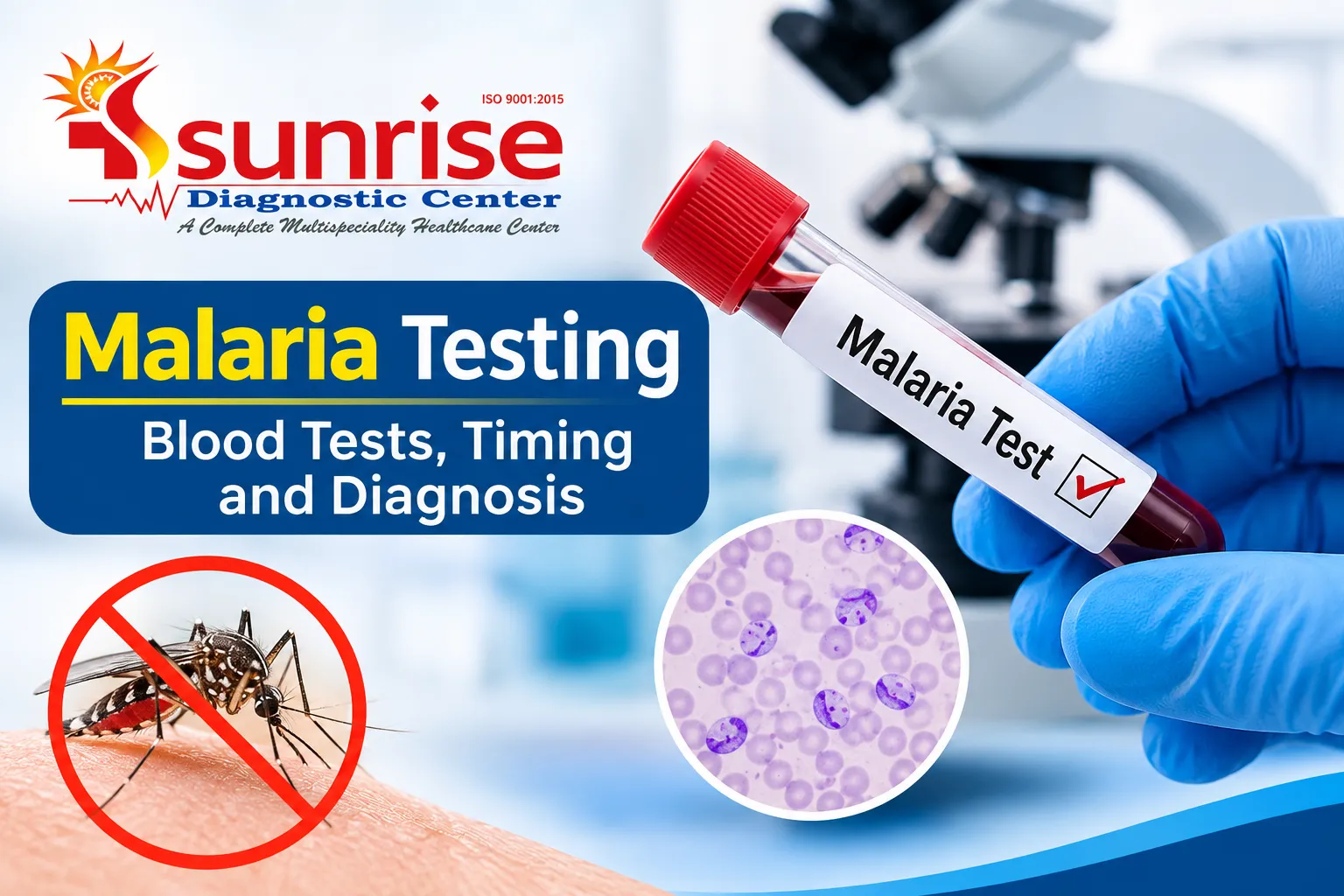
Malaria is a mosquito-borne infectious disease caused by Plasmodium parasites transmitted through the bite of an infected female Anopheles mosquito. It is a significant health concern in India, particularly during and after the monsoon season when mosquito breeding increases. Early diagnosis and timely treatment are essential to prevent complications and protect overall health.
If you are experiencing recurring fever, chills, sweating, headaches or body aches, your doctor may recommend a malaria blood test to identify the infection. Understanding the different types of malaria tests, the right time for testing and how the diagnosis works can help you take the necessary steps towards recovery.
If you are looking for a malaria test in Pune, Sunrise Diagnostic Center, Kothrud, provides diagnostic testing to help patients identify infections and receive timely medical attention.
What Is Malaria and Why Is Early Testing Important?
Malaria occurs when Plasmodium parasites enter the bloodstream and infect red blood cells. The infection can cause repeated episodes of fever, chills and sweating. If left untreated, malaria may lead to severe anaemia, organ complications and other serious health problems.
The common malaria-causing parasites include:
- Plasmodium vivax – A common malaria parasite in India that can cause recurring infections.
- Plasmodium falciparum – Can cause severe malaria and requires urgent medical attention.
- Plasmodium malariae – May cause prolonged or recurring infection.
- Plasmodium ovale – Can cause relapses due to dormant liver stages.
- Plasmodium knowlesi – A less common species primarily associated with certain Southeast Asian regions.
Early malaria diagnosis helps identify the parasite, determine the appropriate treatment and reduce the risk of complications.
Common Symptoms That Indicate You May Need a Malaria Test
Malaria symptoms may appear approximately 7–30 days after an infected mosquito bite, although the incubation period varies depending on the parasite species.
Common symptoms include:
- Repeated episodes of high fever
- Shivering and chills
- Excessive sweating, especially after fever
- Headaches and body aches
- Weakness and fatigue
- Nausea and vomiting
- Loss of appetite
- Abdominal discomfort
- Muscle pain
Some patients may experience fever at regular intervals, while others may have continuous or irregular fever.
When should you get tested? If you experience unexplained fever with chills, particularly during the monsoon season or after travelling to a malaria-prone area, consult a doctor and consider malaria testing without delay.
What Are the Different Types of Malaria Blood Tests?
A malaria diagnosis requires laboratory testing. Doctors may recommend one or more of the following tests depending on symptoms and clinical history.
1. Malaria Parasite Test (MP Test)
The malaria parasite test, commonly called the MP test, identifies malaria parasites in a blood sample through microscopic examination.
A laboratory professional examines the blood under a microscope to detect parasites inside red blood cells.
Benefits:
- Helps confirm malaria infection.
- Identifies the malaria parasite species.
- Can estimate the percentage of infected red blood cells.
- Helps doctors select appropriate treatment.
2. Peripheral Blood Smear Test
A peripheral blood smear is an important method for diagnosing malaria. A blood sample is spread onto a glass slide, stained and examined under a microscope.
There are two main types:
- Thick blood smear: Examines a larger volume of blood and is more sensitive for detecting malaria parasites.
- Thin blood smear: Helps identify the parasite species and estimate the level of infection.
Microscopic examination of thick and thin blood films remains the standard method for laboratory confirmation of malaria.
3. Malaria Rapid Diagnostic Test (RDT)
A malaria rapid diagnostic test detects specific antigens produced by malaria parasites in the blood.
It usually provides results within approximately 15–30 minutes, depending on the test kit.
Benefits:
- Provides quick preliminary information.
- Requires a small blood sample.
- Helps support early clinical decisions.
- Useful when rapid microscopic testing is not readily available.
However, a negative rapid test does not always rule out malaria. Doctors may recommend microscopic examination to confirm the diagnosis.
4. Complete Blood Count (CBC) Test
A CBC test does not directly diagnose malaria, but it helps doctors evaluate the effects of infection on the body.
It measures:
- Haemoglobin levels
- Red blood cell count
- White blood cell count
- Platelet count
Malaria may cause anaemia and changes in platelet levels. A CBC can help assess the patient’s overall condition and identify possible complications.
When Is the Right Time to Get a Malaria Blood Test?
Timing is important for accurate malaria diagnosis.
You should consider testing when:
- You develop fever with chills or sweating.
- You experience recurring fever without an identified cause.
- You have recently travelled to a malaria-prone region.
- Your doctor suspects malaria based on your symptoms and examination.
Should you wait for fever before getting tested?
No. If malaria is suspected, consult your doctor promptly rather than waiting for repeated fever episodes. Malaria parasites may not always be detectable in the bloodstream at very low levels during the initial stage.
If the first blood smear is negative but clinical suspicion remains high, your doctor may recommend repeating the test every 12–24 hours, for up to three sets, depending on the clinical assessment.
Early testing helps avoid delays in diagnosis and treatment.
How Is a Malaria Test Performed?
A malaria blood test is a simple laboratory procedure.
The general process includes:
- Blood sample collection: A trained phlebotomist collects a small blood sample, usually from a vein in your arm.
- Sample preparation: The collected blood is used to prepare a thick or thin blood smear or another requested test.
- Laboratory examination: The sample is examined to detect malaria parasites or their antigens.
- Report generation: The findings are documented and shared for medical evaluation.
Is fasting required for a malaria test?
No. Fasting is generally not required for a malaria blood test. You can usually have your regular meals before sample collection unless your doctor has advised additional tests that require fasting.
What Happens If Your Malaria Test Is Positive?
A positive malaria test indicates the presence of malaria infection and requires prompt medical evaluation.
Your doctor may consider:
- The identified Plasmodium species
- Parasite count in the blood
- Fever pattern and other symptoms
- Haemoglobin and platelet levels
- Liver and kidney function, if required
Treatment depends on the parasite species, severity of infection, medical history and applicable treatment guidelines. Do not take antimalarial medicines without medical advice.
Seek emergency medical attention if you experience confusion, seizures, difficulty breathing, severe weakness, jaundice or reduced urine output.
Where to Get a Malaria Test in Pune?
If you are searching for a malaria testing centre in Pune, choosing a diagnostic centre that follows appropriate sample collection and laboratory testing procedures is important.
Sunrise Diagnostic Center, Kothrud, Pune, offers diagnostic services to support timely health assessment and medical decision-making.
Whether you need a malaria parasite test in Kothrud, a malaria blood test near Karve Nagar or fever-related diagnostic investigations in Pune, consult your doctor about the appropriate tests.
Sunrise Diagnostic Center – Kothrud, Pune
- Diagnostic testing services
- Experienced diagnostic team
- Convenient sample collection
- Support for routine and specialised investigations
- Operating hours: 7:30 AM to 11:00 PM
Contact Number: 9028801188
Frequently Asked Questions (FAQs)
1. Which blood test confirms malaria?
A malaria parasite test (MP test) using thick and thin blood smear microscopy is a standard method for confirming malaria infection.
2. Can malaria be detected in a CBC test?
No. A CBC cannot confirm malaria. However, it may show changes such as low haemoglobin or reduced platelet levels that help doctors assess the patient’s condition.
3. How long does a malaria test take?
A rapid diagnostic test may provide results within 15–30 minutes. Microscopic examination and laboratory reporting may take longer depending on the facility.
4. Can a malaria test be negative during the early stage?
Yes. Low parasite levels may not be detected in an initial blood sample. If symptoms continue, your doctor may recommend repeat testing.
5. Is malaria testing available in Kothrud, Pune?
Patients looking for malaria testing in Kothrud, Pune, can contact Sunrise Diagnostic Center at 9028801188 for information about test availability and sample collection.
6. Is malaria completely curable?
Most malaria infections are curable with appropriate and timely medical treatment. However, the medicines and duration depend on the parasite species and severity of the infection.
Book Your Malaria Blood Test at Sunrise Diagnostic Center, Pune
Do not ignore recurring fever, chills or unexplained weakness. Early malaria testing can help identify the infection and support timely treatment.
For malaria blood tests and other diagnostic investigations, contact Sunrise Diagnostic Center, Kothrud, Pune.
Call: 9028801188 9028566644 9028566611