
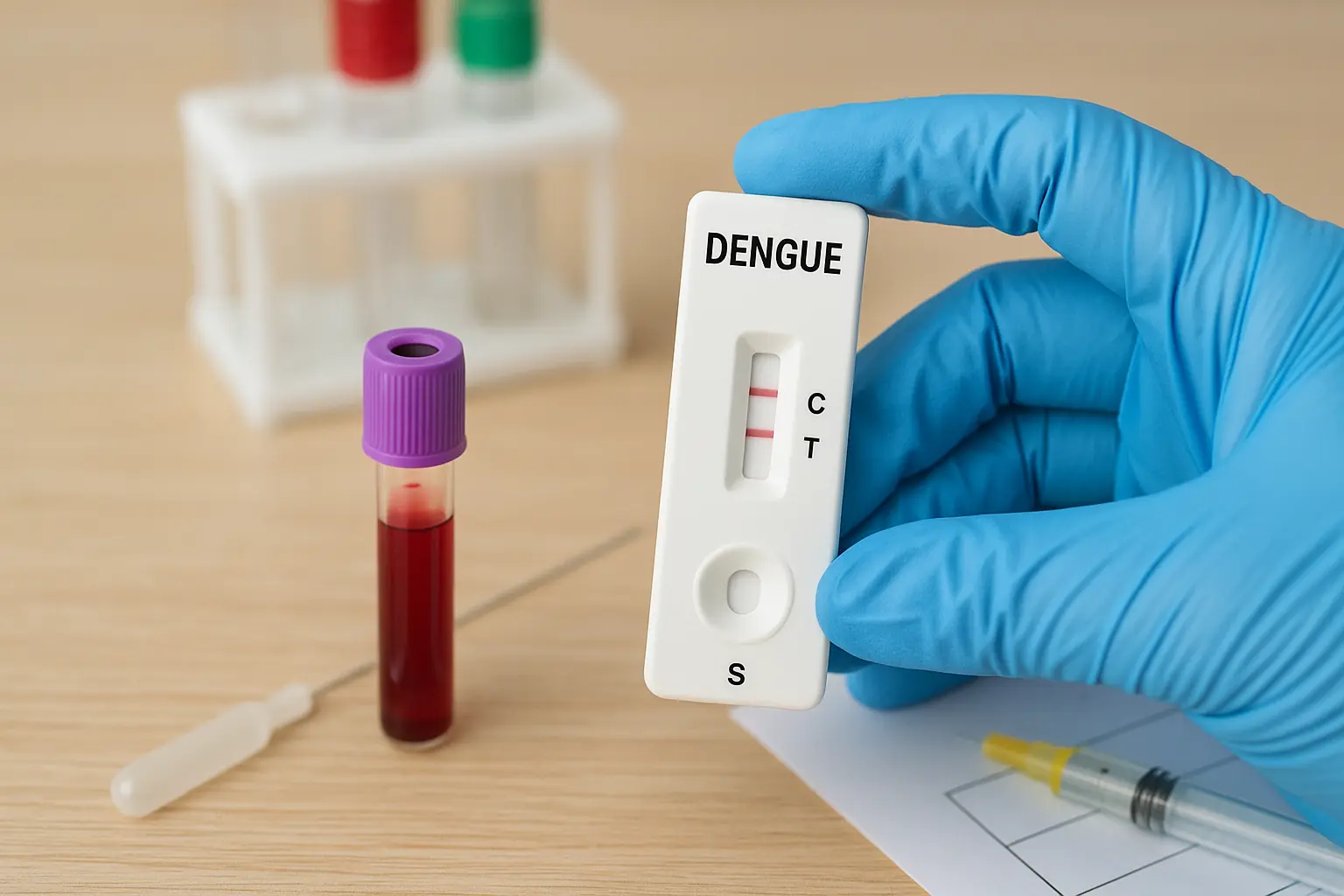
Dengue fever is a mosquito-borne viral infection that can cause high fever, headache, body pain, weakness and other symptoms. Early diagnosis is important because dengue can sometimes progress to severe illness and requires careful medical monitoring.
For people experiencing fever during the monsoon season or periods of increased mosquito activity, understanding the available dengue blood tests can help them seek timely medical advice. Three commonly discussed tests are Dengue NS1 Antigen, Dengue IgM Antibody and Dengue IgG Antibody tests. Each detects a different marker of infection, and the appropriate test depends partly on how many days have passed since symptoms began.
If you are looking for a dengue blood test in Kothrud, Pune, this guide explains how these tests work, when they may be recommended and what their results can mean.
What Is Dengue Fever?
Dengue is a viral infection transmitted to humans by infected Aedes mosquitoes. It is found in many parts of India, including urban areas where mosquitoes can breed in standing water around homes, buildings and other surroundings.
Common symptoms of dengue include:
- Sudden high fever
- Severe headache
- Pain behind the eyes
- Muscle and joint pain
- Nausea or vomiting
- Skin rash
- Fatigue and weakness
Some people may develop warning signs such as persistent vomiting, severe abdominal pain, bleeding or unusual drowsiness. These symptoms require urgent medical evaluation.
Because dengue symptoms can resemble those of other infections, including chikungunya and malaria, a doctor may recommend laboratory testing based on the patient’s symptoms, medical history and the duration of fever.
What Are the Different Types of Dengue Tests?
Dengue testing helps detect either components of the virus or the body’s immune response to infection. The three commonly used tests are NS1, IgM and IgG.
1. Dengue NS1 Antigen Test
The Dengue NS1 Antigen Test detects a protein produced by the dengue virus during infection. It is commonly used to help identify dengue during the early stage of illness.
When is the NS1 test recommended?
NS1 testing is generally useful during the first seven days after symptoms begin, particularly in the early phase of fever. A doctor may recommend this test when dengue is suspected based on the patient’s symptoms and clinical assessment.
What does the result mean?
- NS1 Positive: Indicates dengue virus infection and supports an early diagnosis.
- NS1 Negative: Does not completely rule out dengue, particularly if the test was performed at a time when the antigen was not detectable.
If symptoms continue despite a negative result, the doctor may recommend additional testing or a repeat sample depending on the clinical situation.
People searching for an NS1 dengue test in Kothrud, Pune, should discuss the timing of testing with their healthcare provider to help select the appropriate investigation.
2. Dengue IgM Antibody Test
IgM stands for Immunoglobulin M, an antibody produced by the immune system in response to an infection. Dengue IgM testing looks for antibodies that can indicate a recent dengue infection.
IgM antibodies generally become detectable around four to five days after symptoms begin, although the timing can vary between individuals.
When is the IgM test useful?
The Dengue IgM Antibody Test is particularly useful as the illness progresses. It may be recommended alongside NS1 testing during the first week or as a key test after the first seven days, depending on the clinical assessment.
What does the result mean?
- IgM Positive: Suggests a recent dengue infection, but the result should be interpreted with the patient’s symptoms and other findings.
- IgM Negative: Does not exclude dengue when testing is performed too early in the illness.
IgM antibodies may remain detectable for several weeks or months after infection. Certain other viral infections can also affect the interpretation of antibody test results.
If you need a Dengue IgM test in Pune, your doctor can advise whether it is appropriate based on the duration of your fever and previous test results.
3. Dengue IgG Antibody Test
IgG stands for Immunoglobulin G. These antibodies may develop during a dengue infection and can remain in the body for a prolonged period.
The Dengue IgG Antibody Test helps identify an antibody response to dengue. However, a positive IgG result in a single blood sample does not necessarily mean that a person currently has dengue.
When is the IgG test useful?
IgG testing may help assess previous exposure or support the evaluation of a possible recent infection when interpreted alongside other laboratory findings. In some cases, doctors may compare blood samples collected at different stages of illness.
What does the result mean?
- IgG Positive: May indicate previous dengue exposure or an antibody response associated with a current or recent infection. The result alone cannot establish when the infection occurred.
- IgG Negative: Means detectable IgG antibodies were not found in that sample, but interpretation depends on the timing of testing.
A single IgG result is generally not recommended as the sole test for diagnosing acute dengue.
For those searching for a Dengue IgG antibody test in Kothrud, Pune, it is important to understand that the result needs to be assessed in the context of symptoms and other test findings.
NS1 vs IgM vs IgG: What Is the Difference?
The primary difference is what each test detects and how that information relates to the stage of infection.
| Test | What it detects | Typical use |
| Dengue NS1 | A dengue virus protein | Early stage of illness |
| Dengue IgM | Antibodies associated with recent infection | Often useful from around day 4–5 onward and after the first week |
| Dengue IgG | Antibodies that may persist after exposure | Assessment of antibody response and previous exposure |
The exact timing can vary. Doctors may recommend a combination of tests to improve the assessment of suspected dengue.
Which Dengue Test Should You Take on Each Day of Fever?
The most suitable dengue test depends on the number of days since fever began, your symptoms and your doctor’s assessment.
Days 1–3 of Fever
NS1 antigen testing or a molecular test such as RT-PCR may help detect dengue during the early phase. Antibody tests may still be negative because the body may not have produced detectable antibodies yet.
Days 4–7 of Fever
NS1 testing may remain useful, while IgM antibodies may begin to become detectable. Depending on the clinical situation, a doctor may recommend NS1 and IgM testing together or another suitable testing combination.
After Day 7 of Fever
IgM testing generally becomes more useful for identifying a recent infection. A doctor may recommend repeat or additional testing if earlier results were negative but dengue is still suspected.
These timeframes are general guidance rather than fixed rules. A negative result does not always exclude dengue, and the appropriate testing approach should be determined by a qualified healthcare professional.
How Is a Dengue Blood Test Performed?
Dengue testing usually involves collecting a blood sample at a diagnostic laboratory.
The general process includes:
- Sample collection: A trained healthcare professional collects a blood sample using a sterile needle.
- Laboratory analysis: The sample is tested for the requested dengue antigen or antibodies using the laboratory’s validated testing method.
- Report preparation: Results are recorded and released according to the laboratory’s reporting process.
- Medical interpretation: A doctor evaluates the results alongside symptoms, fever duration and other relevant findings.
Patients should follow any preparation instructions provided by the laboratory. Fasting is not routinely required for dengue testing alone, but it may be needed if other tests are ordered at the same time.
Why Is Early Dengue Testing Important?
Early evaluation can help doctors identify a possible dengue infection and plan appropriate monitoring. However, testing is only one part of dengue management.
Timely medical assessment is important because:
- Dengue symptoms can overlap with other infections.
- The most suitable test may change as the illness progresses.
- Some patients require monitoring of blood counts, hydration and other clinical parameters.
- Warning signs may develop even when fever starts to improve.
A doctor may recommend a complete blood count (CBC) and platelet count alongside dengue-specific testing. Platelet counts should not be used alone to determine the severity of dengue or the need for treatment.
Seek urgent medical care if you experience severe abdominal pain, persistent vomiting, bleeding from the nose or gums, blood in vomit or stools, difficulty breathing, fainting, or marked drowsiness or restlessness. Do not delay care while waiting for a test report.
Where to Get a Dengue Test in Kothrud, Pune?
If you have symptoms suggestive of dengue, consult a healthcare professional to determine which laboratory investigations are appropriate.
Sunrise Diagnostic Center, Kothrud, Pune, provides diagnostic services for people seeking laboratory investigations in the local area. If you need a dengue test in Kothrud or nearby areas of Pune, contact the centre to confirm the availability of the required NS1, IgM or IgG test, preparation instructions and report turnaround time.
Choosing the correct test at the appropriate stage of illness can help your doctor interpret the findings more effectively.
Whether you are looking for a dengue blood test near Kothrud, a Dengue NS1 antigen test in Karve Nagar, or dengue IgM and IgG testing in Pune, seek medical advice before deciding which investigation you need.
Frequently Asked Questions About Dengue Testing
1. Which dengue test is best for early detection?
NS1 antigen testing and molecular tests such as RT-PCR can help detect dengue during the early stage of illness. The choice depends on the timing of symptoms, test availability and the doctor’s assessment.
2. Can an NS1 test be negative even if I have dengue?
Yes. A negative NS1 result does not completely rule out dengue. The result may depend on the timing of sample collection and the test used. Your doctor may recommend IgM testing, another investigation or a repeat sample if necessary.
3. What does a positive Dengue IgM result mean?
A positive IgM result suggests a recent dengue infection. However, it should be interpreted with symptoms and other test results because antibody tests can sometimes react with antibodies associated with other infections.
4. Does positive Dengue IgG mean I currently have dengue?
Not necessarily. IgG antibodies can remain detectable after a previous infection. A positive IgG result from a single sample cannot reliably distinguish a past infection from a current one.
5. Is a platelet count enough to diagnose dengue?
No. A platelet count is not a dengue-specific test. Doctors may use CBC results, dengue antigen or antibody testing, symptoms and clinical examination together to assess the condition.
6. When should I get tested for dengue in Pune?
If you develop fever with symptoms such as body pain, headache, nausea or rash, seek medical advice promptly. The doctor can recommend testing based on the duration of symptoms and your clinical condition rather than relying on a fixed testing schedule.
7. Do I need to fast before a dengue blood test?
Fasting is not usually required for dengue testing alone. If additional blood tests are ordered, follow the preparation instructions provided by your doctor or diagnostic laboratory.
Conclusion
Understanding the difference between Dengue NS1, IgM and IgG tests can help patients make informed decisions about laboratory investigations. NS1 is primarily used to detect a viral protein during early illness, IgM helps identify a recent antibody response, and IgG may indicate previous exposure or form part of a broader diagnostic assessment.
If you are experiencing fever or suspect dengue, consult a qualified healthcare professional and get tested at the appropriate time. For information about dengue testing availability, contact Sunrise Diagnostic Center in Kothrud, Pune.
Call Now: 9028801188 9028566644
Disclaimer: This AI-generated content has been reviewed and edited by Dr. Shandrashekhar Shinde for informational purposes only. It is not a substitute for professional medical advice, diagnosis, or treatment.